

24 min read
.png)
What This Episode is About
In this powerful episode of The Bridge, Cate sits down with Dr. Kip Glazer and Tiffany Carson, two education leaders who weathered the challenges of the pandemic together while building a districtwide Wellness Center initiative to support students, staff, and the community. Their conversation reflects on what true partnership and courageous leadership look like—especially in times of crisis.
From navigating systemic change to redefining mentorship and belonging, Tiff and Kip share how they leaned on each other for honesty, laughter, and perspective when everything around them was shifting. Together, they explore lessons on empathy, boundaries, and sustaining leadership in an increasingly demanding field. This episode is a masterclass in collaboration, compassion, and courage.
Meet Our Guests
Tiffany Carson is a systems leader and lifelong educator who believes that thriving schools are built on access, belonging, and care. As the Director of School and District Support at the Santa Barbara County Education Office, she helps districts strengthen equity-centered initiatives in social and emotional learning, organizational wellness, and the responsible integration of artificial intelligence in education.
Across nearly two decades as a special education teacher, high school administrator, and district leader, Tiffany has worked to close opportunity gaps and expand access for all students. She led efforts that increased A–G completion, College and Career Readiness, and CTE participation across every student group—even through the pandemic—and launched California’s first Interpretation and Translation CTE pathway. Her leadership of school counselors and cross-system teams reflects a belief that equitable outcomes depend on coherent systems and human relationships that work in harmony.
Now pursuing her doctorate in Organizational Development and Change, Tiffany brings both courage and compassion to her work with educators—helping them navigate the complex realities of teaching today while holding space for hope, dignity, and possibility in public education.
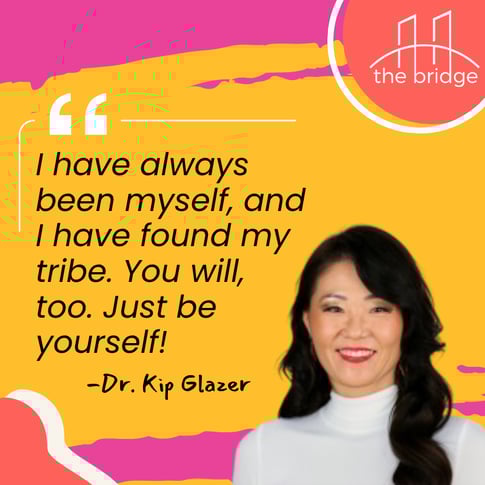
Dr. Kip Glazer is an innovative school leader and lifelong educator who currently serves as Principal of Mountain View High School in California. A native of Seoul, South Korea, she immigrated to the U.S. in 1993 and has since built a distinguished career as a teacher, administrator, and advocate for equitable, technology-driven learning.
Kip began her teaching career in 2003 and has taught both high school and college courses. She holds multiple teaching and administrative credentials and earned her Doctorate in Learning Technologies from Pepperdine University, where her dissertation explored game-based learning to enhance literacy and numeracy.
She has won numerous awards and presented at national and international conferences. Kip is recognized for her leadership in AI integration, game-based learning, and instructional innovation. She has served as an advisor and consultant for organizations including the U.S. Department of Education, Digital Promise, The Kennedy Center ArtsEdge program, and the EngageAI Institute. A 2023 CSTA Equity Fellow and 2024 Google Innovator, Kip firmly believes in empowering youth.
Key Takeaways
-
- Leadership is not about titles—it’s about authenticity, reflection, and showing up with empathy, even when the work feels impossible.
- Kip and Tiff’s partnership through the creation of a Wellness Center during the pandemic shows how collaboration can turn crisis into opportunity.
- Be hard on the problem, not the person. Build circles of trust where feedback is honest, compassionate, and centered on growth.
- Mentorship and belonging. Kip and Tiff remind us that strong leadership is built on mutual respect, shared humanity, and the courage to lift others—always choosing to “be a dolphin, not a crab.”
Transcript
Cate Tolnai (she/her): Hey, welcome can I call you Tiff? It's just gonna happen. So is that okay if I just call you Tiff?
Tiffany: That is fine. Yeah.
Cate Tolnai (she/her): Tiff and Kip, which I just have been loving saying all week.
Tiff and Kip, Kip and Tiff, and, that. Welcome to The Bridge I am very, just heart is really happy to see both of you on here. Kip, I don't know you as well, so I'm like very selfishly, like getting very excited to, to get to know you more in this episode and, and learn about your relationship with Tiff and y'all have, have managed so much change together. So, so tight. So tight. and Tiff is my husband, my partner in crime for a couple years now. So I, just so fun. And, and I'll just say like this right here, the two of you. this was my vision, like when I think about educators that have been through. have been through it together. Through it together.
I, I've learned that you two have been through some stuff together and really the bridge is about, capturing those stories of community and togetherness and, safety and love and, and. Moving those out into the universe so that educators that are in different parts of their career that are wondering, you know, what do I do and how do I do it?
Kip Glazer: Fine.
Cate Tolnai (she/her): can start to form those bridges with people in their community like you all have. So it's super special to have you on. I'll stop talking now and let you both introduce yourself. your bios will be in the show notes, so feel free to just riff. I'll let you fight it out. Duke it out. Who's going first?
Tiffany: Okay. well I am Tiffany Carson or Tiff, and, I. Have been a special education. Paraeducator special education teacher. I have been an assistant principal at a comprehensive high school. I've served at a district office doing all things kind of college and career readiness. So love my counselors, love my CTE teachers, like love.
All of the opportunities that dual enrollment can afford. And now I work at a county education office where, I support district leaders thinking through the decisions that come with the development of strong LCAPs, and differentiated assistance. But I also lead local efforts around, artificial intelligence and social emotional learning.
So, yeah.
Cate Tolnai (she/her): I don't have enough fingers. I just started counting my toes.
Tiffany: Other duties is assigned, right? Isn't that how we roll as educators?
Cate Tolnai (she/her): Seriously.
Tiffany: I love it. And I love it all. Yeah.
Cate Tolnai (she/her): do too. And I live close enough to where I get to see Tiff, like IRL, which is the best. and, and Kip. Glaser.
Kip Glazer: My name is Kip Glazer. I had the distinctive pleasure of working with Tiffany as a high school principal trying to expand our dual enrollment program, strengthen CTE. We were in a journey together to get the wellness center built at San Marcos High School. even though I take full credit, because that's what principals do, just kidding.
we would help from Tiffany San Marco High School and the district was able to win Close to almost $700,000. Right? The Strong Workforce Grant build a wellness center, which has been my dream since I became the principal at Summer Cross High School. And then since I left, Tiffany has been a continuing force in moving the agenda forward.
So I am super excited to hear some updates on San Marcos High School Wellness Center, now I'm currently. at Mountain View High School in Mountain View, California, where I serve a lot of parents who work in the tech industry. And we have launched a new program called Tech Internship Program, which is, which has been my passion 'cause I used to be a tech trainer for a large district in Central Valley. And I think that leadership philosophy has been that. Smart people need to leave this world a better place, but we need to use our intelligence to create kind humans that we can continue to fulfill the mission of education, which I believe the purpose of education is to create an educated populace for the protection of democracy. we educators do an important job of maintaining. Democracy and I think that we're all in this together.
Cate Tolnai (she/her): I love it. I think you shared about just the time you spent, and I know the story of the health center development, just from what Tiff has shared with me, is incredible the resources it's gonna bring to our local community here in Santa Barbara. And I'm just. Amazing to me that you all did the huge lift that you did, but I, so, so I would love to know, like I, when, like I said, I wanted to bring on people that have been through it together.
And so maybe take a minute to kinda paint the picture of what it looked like to go through part of the, it feels the most sparkly or now it's sparkly, maybe in the moment it wasn't so sparkly. Or impactful. Or memorable? Yeah.
Kip Glazer: Yeah, I'll go, I think the, of Wellness Center and just jump in and correct me anytime. 'cause you know, as you get older you start to like, did it actually happen? idea of Wellness Center though has been around in the community, right? Like, I think there was sort of like the seed or desire have something. Physical represent representation of the community's desire to support our young people. a place or a program or, or investment. So when I arrived at San Marcos, I was, I became the principal during the first year of pandemic,
Cate Tolnai (she/her): Hmm,
Kip Glazer: right? So there were conversations around wellness being important, and then boom, pandemic hit, shut down, and then post pandemic the need. And desire to really support our young people in meaningful became stronger. And I think we took advantage of that momentum, which is kind of strange 'cause post pandemic with hybrid learning. I just remember the pain point of. People trying to figure out what are we gonna do for our kiddos? And I think that's where Tiff and I and, and a lot of people, and I'm not trying to say we did it all and I just wanna be very upfront and clear, but from our perspective, we sort of leveraged the, whatever the challenge was and turned it into an opportunity.
And I think that's really the sort of message or lesson, right? I think that when we are so in it, we. Struggle to see the opportunity it can bring. And that's why I really admire, really, I have deep respect for Tiffany for that. I think we were in that solution mode and going for the opportunities that are out there that other people may not have been looking. And so half the funding actually came from our bond. Where it was designated for a building. And I said, what if we do this fundraising to create the matching opportunity and we harness our energy into wellness center? 'cause that's what the community wants. And then I said, I could probably swing that with the building stuff, but what are we going to put in it? And Tiffany was like, we'll write a grant. And then that, that's how it all came together. you have anything to add?
Tiffany: And I want to emphasize too, like the idea of a wellness center, there's a lot of that language right now with wellness coaches and with community schools, but what is. Maybe different and unique about what Kip and I are talking about was, San Marcos already had a health career academy where there were CTE and dual enrollment courses that led to that had a partnership with, our local cottage hospital.
So students already had this pathway where they were exploring, medical careers. Getting their like a CNA certification doing all of these things. And when we were saying wellness center, it was not just. We need a, like a building on campus where families can be connected with resources, but it was, how can we find ways for our students to be part of the conversation about wellness and how can we create a pathway where students can, one, learn about wellness careers beyond what we think of physical wellness where.
The Wellness Center can also be a place for students to provide peer coaching, peer mentorship. We can also be that place where community members can get connected to wellness resources as well. So when we say wellness center, I wanna really paint a full picture of this like idea of building community wellness and, and leveraging the assets and passion of our students to support their current realities as well as their future careers.
So.
Cate Tolnai (she/her): And it And the teachers too, right? Like was that
Tiffany: Yes, yes, yes.
Cate Tolnai (she/her): I think that's what's really striking about this story and kind of like how, what it represents as far as. Like how you two maybe took care of each other during that time? Because I mean, to be a leader, to be an educational leader during the pandemic, like, like no joke, right?
I mean, anybody in education
Kip Glazer: I'm sorry.
Cate Tolnai (she/her): time, they were really, they were really just stretched, but to also be navigating systemic change and systems and operations and all of it. Like, oh my goodness. That that, and, and so how did you two find each other during those times? Like what did support between each other look like?
Kip Glazer: Phone calls, interesting emails. Or texting, like, what the heck just happened? Did that person just say that? And it's usually me sort of being little fiery and then tip saying, okay, what I heard that person said was X and kid, I think you could potentially think about it this way and. 80% of times that work and other times I'm like, shut up.
I'm just gonna be mad about it. And that's okay. Right? Like you find people, and I think that was me, comic belief, and she, and she would just laugh and be like, yeah, that's true. That person was really outta line and. Let's go back and focus on the problem. I'm like, sometimes you just have to say, we're mad about it.
Okay. It is okay. And I think that's what's important to my girlfriends, right? We can say that and then we come back down to it and then we can sort of like co switch and go, okay, whew, let's go into the meeting. And we would do a lot of pre-gaming too. There are meetings where we go, okay, who's the, I mean, I usually am the, the driver, right?
Like the principal. That's the role. And I go, okay, I'm gonna ask I mean, make demands, and I'm gonna ask for all these things, knowing that if I ask for seven things, I'll probably get three. And like, okay, let me just give you the background of all these humans. And then, yes, we could probably get. Four things and I'm like, oh, I was gonna set up for three. Like we do a lot of that and then after the meeting we, we be like, so how did I do? usually Tiff is too kind and too polite to say, well, perhaps you could have said this differently, but we got there. We are. Okay. that accurate description, TIFF?
I don't wanna describe it differently.
Tiffany: No. Well, I, I, I don't, I mean, I want you to give credit to yourself as well. I mean, it was, Having, there were, there were so many things right there, there was navigating the pandemic. We were both new to our roles, so I was new to, to my role as a district coordinator. And so, you know, there we were building relationships with each other.
We were building relationships with the, the students, the teachers, the families that we were there to serve. We were doing it under. Pandemic conditions. And we also were at a district where, there were changes in, in leadership that were also starting to change some of the culture. And, you know, everybody was kind of on uneven.
Footing. And so, you know, Kip's talking is talking about intentionally checking in with one another and you know, I'm just so grateful Kip that you and I were able to get to a place where we could be direct and we could be vulnerable with each other and be like, I think I just blew that. You know, not.
Like me, like I think I, I think I blew that like I overstepped or this is what I thought this is, this was my intent, but this was the impact this, am I reading that right? Or what's your take on it? And so finding people who can give you that honest feedback, but from a place of wanting you to be better.
Wanting the system to be better. Like that's something that I find so valuable about you, Kip, and something that I've learned so much from you about, you know, so whenever you're working on something, finding those people who will tell you like it is in love. Like that's huge.
Cate Tolnai (she/her): it's so, it's so amazing to hear, Kip, your description of Tiff because I feel like there might be some parallels in my relationship with Tiff and I, which tells me there's definitely some commonalities you and I share. She's, she's, yeah, she's been a, a really, I, I think the best part of, of your support, Tiffany, is just like. Your brain is going so fast, but your delivery is so intentionally like comprehensible. And that is what I've really appreciated about just being in your orbit and problem solving and ideating with you. And like she, like she says, she was leading the, she leads the A, she's part of leading the AI efforts in the county and like she started that because she signed up to be a participant in a session I was doing, and then she became like the co-facilitator the same day.
I mean, and. Girlfriend stepped up, like, she's like, done. I will learn. And boom, here we are. And it's just really, it's, you know, we talk, we're talking about social intelligence and emotional intelligence and, and I think that it's, it's interesting to hear that those type of like, that those, that we must all be in tune whether we realize it or not.
And I think having someone like to bounce ideas off of that's gonna let me be my true. Semi chaotic self from time to time, is really important. And, and also makes me wonder like how do we, how do we help other educators kind of cultivate that? Like is there, are there examples, like, you guys have been in leadership, so you've seen like what works and what doesn't work.
Like what do you see as being like a component of community on campus that you think really works?
Kip Glazer: About it. It's a community component. I think I know what works for me is that I am an immigrant. I had to learn to speak English. in a position where people who look like me, sound like me, have my background, don't occupy very often. Research is very clear, right? 'cause the direct pipeline to superintendency is comprehensive High school. majority of them, and many of those roles are not necessarily occupied by somebody who is in my profile. And that's been like that since I arrived at In, in United States. It's always like, oh, you wanna be an English teacher and you're a language learner. How does that work? Or you wanna go into tech?
Coming from a humanities background, how does that work? oh, you wanna be a high school principal, like, but you never played football though. So how does that work? Like always these sort of like questioning. And I've decided early on that I was gonna fully lean into my otherness, if you will, and I'm gonna look at that as a strength, not as a weakness. I've decided that. fight that Narrative about climate kick, right? So that's the, the phenomena that people talk about. Women when they climb, they kick other women.
Cate Tolnai (she/her): Hmm.
Kip Glazer: don't do that. Like that is a terrible narrative and we need to debunk that, So I was at an event recently, I was on a panel and this leader who is minority leader and somebody, and she was talking about microaggression, right?
Somebody in. In her sphere said, oh, you type of leader all the same. You'll like crabs, put them all in the and they climb and try to get to the air by pushing other people down. That's why I don't wanna hire like you. And I was just so devastated and I was like. and I looked at her and she is a superintendent or assistant superintendent of a large district that made such transformational changes under her leadership, and she was talking about her ascension to that position and how challenging that was.
And hearing from another woman leader of that description of her future was just how devastating that was. And that's what I said. I have a new slogan like, don't be a crab, be a dolphin. Because I have seen where situations where I am trying to pull my other people up.
Cate Tolnai (she/her): Did it freeze for you? Tiff?
Tiffany: Yeah, I've lost her.
Cate Tolnai (she/her): Okay. Oh my God. I'm obsessed with this metaphor like. Be, be a dolphin, don't be a crap. Like, I don't know what I would do if I was sitting in that, around that comment. Like, have you ever received any sort of feedback like that tiff on your like, experience kind of, doing, I, I won't say climbing the ladder, I call it, I, I think of my career as like a jungle gym.
And so as you've been traversing your own jungle gym professionally.
Tiffany: yes, and to Kip's point, I do think that there is often a perception that there's not enough space, right? That somehow if, if one person's getting something. And, and you see this actually in education, not even just about positions of leadership, but if we give access or if we give this thing to somebody, that means that we're taking away something from somebody else.
And there's so many examples in real life about how that's not how things work. And I, I have talked to people about like this idea of love, right? Like. Love is not a finite resource. I can add, add people that I love, and that in no way takes away from what other people have or the love that I have for other people or have how that, how that manifests.
And Kip, I wanna, she's, I, I think we lost her for a little bit, but I just want to
Cate Tolnai (she/her): she'll pop back on.
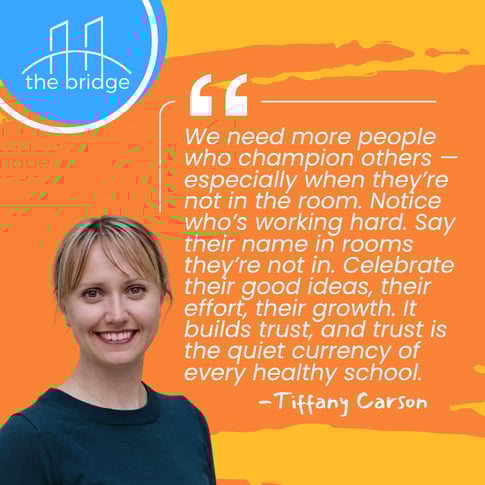
Tiffany: Great. I wanna give her props because when I think about Kip and my experiences with her, she is one of the best people I know at speaking on behalf of other people, even when they're not in the room. She is very thoughtful about giving credit where credit is due, and that's even, you know, that's not to say that she necessarily has to agree with blindly everything that the people around her or her co-leaders or the people that she ports supports say, but she's able to find the thing.
About everybody, every person that she interacts with, it's like, oh, that's a thing that I can give gratitude for, and I don't have to take, you know, I don't have to take all the space in the room. She's always been a dolphin. I've never seen Kip be a crab.
Cate Tolnai (she/her): Noted.
Tiffany: So, yeah. Yeah.
Cate Tolnai (she/her): I wonder if, I mean, I can't say that I've worked strategically all over the years to surround myself with other dolphins, but I do think that more recently, like, just over this last year being a contractor for, for these 15 months, like I've had an opportunity to really assess like who I surround myself. With and why those people are in my life. And I think that concept, like really paying attention to the crabs and the dolphins and whatever form they take, sometimes they happen within me. Like sometimes I'm my own crab, you know? Like sometimes I'm the one who's like pushing myself down because of X, Y, or Z.
And I think it's important for us to acknowledge that like, you know. you're an educator and you're having a moment where like you feel like something is limited and you need to do what you can to get it, like that's a very normal feeling. and I don't know, I don't know what to do with it except to say like, I, I get it.
You know, like we, we aren't all born, not everybody is born or lives or is able to be a dolphin in every moment,
Tiffany: Fair. And one piece of advice I'm thinking of, earlier on in my career, there was a superintendent, I think he is now, I'm not sure where he is now, but Ben Grody, Dr. Ben Grody. He used to have a saying. That I loved. That was be hard on the problem, not the person. And I really, I, I'm not, I, I cannot claim to live up to that all the time, but I do like try to say that to myself internally as a check, you know,
Cate Tolnai (she/her): you live
Tiffany: am I.
Cate Tolnai (she/her): you live that you help. Like you don't.
Kip Glazer: Percent.
Cate Tolnai (she/her): And like you don't even say it, but like you live it. Because I'm thinking like how many times you've helped me. Adjust my perspective to look at a problem, not the, not the source of where the problem's coming from. And that is, that is a gift.
That is amazing. Kip, in your absence, you missed a little love fest from Tiff, saying you have never been a crab.
Kip Glazer: Thank you and, and that, that. Really matters to me. I really am trying to be a dolphin, right? Like
Cate Tolnai (she/her): I.
Kip Glazer: for food together. They try to cooperate, they learn
Cate Tolnai (she/her): Mm.
Kip Glazer: and that's what educators and education leaders. Should
Cate Tolnai (she/her): Yeah.
Kip Glazer: try to lift other strong female leaders up, and I have to tell you, I mean, Tiff's been in admin situation before. It is getting harder and harder to be good leader, period. And it's just sometimes there are days it's almost impossible to be a good leader. I think it's education is getting
Cate Tolnai (she/her): Mm.
Kip Glazer: harder because it's like all problems for everybody. It comes to, because we serve all
Cate Tolnai (she/her): Yep.
Kip Glazer: So then everybody's issues, problems all come to school and we're asked to do more and more and more with less and less and less. And what is so fascinating to me is people say, oh, I would never wanna do your job all the time, at least once or twice a day. I
Cate Tolnai (she/her): Wow.
Kip Glazer: and I really wanna say it like then don't make it
Cate Tolnai (she/her): Yeah.
Kip Glazer: Be kinder to me, be nicer to me, be more patient with me, know that we, I mean, I'm not just
Cate Tolnai (she/her): Yeah.
Kip Glazer: myself, I'm saying like school leaders, we're doing the
Cate Tolnai (she/her): Yeah.
Kip Glazer: with what we got, just so.
Cate Tolnai (she/her): Hmm.
Kip Glazer: everything that we're doing at every moment. I think we need, and you know, those podcast people tell you, oh, you should give yourself
Cate Tolnai (she/her): Yeah.
Kip Glazer: like, I give myself plenty of grace. It's just the
Cate Tolnai (she/her): Is the other people aren't doing it right. Right.
Kip Glazer: They need to give us a break, man.
Cate Tolnai (she/her): So that
Tiffany: Yeah.
Cate Tolnai (she/her): to the next question, which is how individually, how do you both refill after you've done your pouring out each day? What's your refill like?
Kip Glazer: I
Cate Tolnai (she/her): Hmm.
Kip Glazer: like, know people think I'm crazy, but I get up around 4 45
Cate Tolnai (she/her): Wow.
Kip Glazer: the morning
Cate Tolnai (she/her): You're not crazy. That's amazing. I wish I could do that.
Kip Glazer: and I force myself to go for a walk at least an
Cate Tolnai (she/her): Wow.
Kip Glazer: Because I find that when I don't do that, I'm not as kind
Cate Tolnai (she/her): Hmm
Kip Glazer: to my people because I feel depleted.
Cate Tolnai (she/her): hmm.
Kip Glazer: during that time I listen to books or talk to people who are at East Coast
Cate Tolnai (she/her): Oh yeah. Right.
Kip Glazer: to them.
Or just sometimes I don't do anything other than just walk to be quiet with my thinking.
Cate Tolnai (she/her): I love it. I bet you Tiff.
Tiffany: Oh, this is tough and not something that I always get right. for sure. Like emails. Let's talk about that. I mean, hours of communication, especially when you are a site leader. and you know, trying to think about that balance of leading by example, am I sending emails to teachers at crazy hours? 'cause that happened to be the free time that I have.
But then making sure that they don't feel like my expectation is that they're reading and responding things, you know, so. Am I using schedule sends? Am I putting an email sign off that says I am sending this at the time that works best for me? Please respond to the appropriate time that works best for you.
Cate Tolnai (she/her): great.
Tiffany: and you know, earlier, Kate, you mentioned like emotional intelligence and I think as leaders part of that is, Talking explicitly with ourselves, the people who care about us in our lives, like the teams that we serve about when is this a season of busyness and it's just a season or a moment or when is something becoming a culture and a problem?
And you know, I think
Cate Tolnai (she/her): Yeah.
Tiffany: one thing that I struggle with is I tend to be very like, direct. We're here to work. Let's get to work. And. I think trying to find moments to build in fun or laughter or those gratitude practices because it's about the work, but also it's, it's about the people and we are not going to be able to sustain ourselves and the work and the importance of education is something that supports democracy.
If we can't be healthy together. I'll also say, which is maybe premature advice, but have the courage to remove yourselves from situations where the conditions are not there for you to be healthy. And you could, somebody could listen to this and say, well, that's education generally. Yes. And I have lived in places where the culture is healthy and we were able to sustain one another.
And I have lived in situations where the culture was not healthy and it took time and other people checking in on me to be like, this is not, this is not sustainable. This is not healthy. And, and you know what? You can find other places. Where you can make a difference and where you will add value, where you will be valued and you can help others feel value and you know, so I'm not saying tough it out, I'm not also saying don't be a wimp, but develop, you know those people in your life who can tell you like,
Cate Tolnai (she/her): Yeah. I, I,
Tiffany: this isn't good.
Cate Tolnai (she/her): Yeah. Your critical friends, right? The critical friends, or, I was, I was recording a podcast earlier and the idea of forming your own personal executive board. You know, where you, like, you have the friend who's gonna be, you know, serve this role and this role and this role. And if you, and, and I mean, I guess you could call them your executive board, she actually does with a couple of her girlfriends.
But, but that idea is of, of really like, of really creating, an environment and a community that sees you and accepts you and loves you and includes you. And yet, you said this like, like. Lean into our otherness in a way that like elevates it as a strength. I think that's so beautiful and I've never, I've, I always preach belonging.
Belonging, but I have, I have never heard you say, have heard anyone say it the way you did. So thank you for that. Like, like how empowering I can actually like take what makes me different and, and acknowledge it and like use it in a way that like I used to hide it. Right. And that is like, just like that's a game changer.
And I, I thank you for that little nugget. 'cause that's, that's my gold for today. That's amazing.
Kip Glazer: thank. Well you are welcome and thank you.
Cate Tolnai (she/her): Yeah.
Kip Glazer: And I think that I wanna also respond to
Cate Tolnai (she/her): Hmm. Yeah.
Kip Glazer: right? I think, I feel like women are inculturated to be hard on ourselves, right? When things are tough. I mean, maybe in some ways, like it's very sexist comment, but I don't hear men say often like, I must have done something, or It must be my problem. They usually say it as it's a problem, as opposed to my women colleagues. like, oh. If they internalize
Cate Tolnai (she/her): Yeah.
Kip Glazer: that identity of having to be nurtured, the fixer, all of that, and I try to say it is okay to just state the facts. Just say it is a problem. It's not our problem, it's my problem. There is a problem, right?
Cate Tolnai (she/her): yeah,
Kip Glazer: then there is a little bit of mental distance,
Cate Tolnai (she/her): yeah.
Kip Glazer: can actually bring your nurturing self to
Cate Tolnai (she/her): Yeah.
Kip Glazer: So that's something that I try to model. And specificity of language is super important,
Cate Tolnai (she/her): Hmm
Kip Glazer: right? So I try to listen for what I, what I heard you say is this, is it really what you mean? it sounds like you're somehow expecting me to fix all of your
Cate Tolnai (she/her): hmm.
Kip Glazer: right? Like, so, and first of all, is it even a problem, right? That that's another thing. What problem are we
Cate Tolnai (she/her): Right,
Kip Glazer: to
Cate Tolnai (she/her): right.
Kip Glazer: And is it within your control? Is it within my control? Okay. Is that the
Cate Tolnai (she/her): Oh yeah.
Kip Glazer: really like defining that problem and let's not own the world's problem here. So, and I think leadership is so important. I've had lots and lots of great leaders and I know I owe huge chunk of my to Kerry Matoka, who hired me and gave me a job. I swear when he called me, oh, we've left offer you a job. I was an as like assistant principal for two years and an administrator of whopping three years. And I was like, what were you thinking? You are crazy. And yet he gave me the job. And that first year when I became the principal, I was the pandemic
Cate Tolnai (she/her): my God.
Kip Glazer: Like talk about luck. I was very lucky. And I think that we do have to honor the people who see our potentials in a way is honoring their sort of trust and faith by showing up with our
Cate Tolnai (she/her): Yeah.
Kip Glazer: every single day.
That's how I honor many
Cate Tolnai (she/her): Love it. And, and so my last question for both of you, if you could go back, I've asked this question of most of many of my guests, if you go back and talk to yourself as a third year teacher, but I wanna ask you a different question. I wanna ask you both. If you could go back and talk to yourself as a second year admin. What would you, what advice would you give yourself knowing what you know now? Having stormed and normed?
Kip Glazer: You wanna go first? Tiff?
Tiffany: I don't know. I'm still, I'm kind of ruminating. Do you have something?
Cate Tolnai (she/her): I mean, you could work it out out loud, just work it out.
Tiffany: Well, one of the things that I think is challenging, whether you're a teacher. Or you're a new administrator, is that you, you go through your program and then you're put on a campus and then it's just the work and it's intense and it's in front of you. And those first years are so forming, they're so formative.
Right? And so who you connect with. What you see outside of your classroom is hugely impactful. And so I, you know, as a new teacher, I think, wow, I wish I could have gotten into more classrooms. And because I was a special education teacher, I was able to do that in a way that sometimes I think so of my general education colleagues weren't able to do.
But I was in math, I was in science, I was in English, like I was everywhere. and I think as new administrators too, and especially if you're on an elementary campus, man, you, we have elementary campuses where you can be the only administrator. But how do you learn about different approaches? How do you learn, hey, you know, it might be a culture in the way we do things in my district, but did you know there's other ways of being?
There's other ways of thinking about it. And, You know, there's a beauty in coming up within the system where you've taught and where you've been an administrator, and there is value too in considering what things look like outside of the context that you are most familiar with. And so find those people that you can connect with that are gonna offer you that alternative perspective.
And that can come from your students and that can come from your families as well as colleagues. Who are situated in other places.
Cate Tolnai (she/her): I love that. That's great advice. Kip, you ready to drop the mic?
Kip Glazer: Oh, I don't know. I might have to change my mind a couple times. I think I. I tend to go quick to the outcome, and I think that I've been very, very lucky. I have been able to find people who can gimme lots of shortcutted advice and, and I thought like, what is there for me to give
Cate Tolnai (she/her): Hmm.
Kip Glazer: I don't like because you're a baby
Cate Tolnai (she/her): Mm-hmm.
Kip Glazer: You're like, oh, I'm just taking right now.
I'm just taking in. the advice I would give myself is, that give yourself break. Being a leader is so hard that you would have to yourself like the, the skills that you didn't even know you needed, because I think there is a difference between being a leader and having the title. Leader.
Being a leader. Yeah. Being a leader is about a mindset and a practice and how you show up in the world, is not the same as the title that you get. So then I think I would spend less time worrying about my title, but more
Cate Tolnai (she/her): Hmm.
Kip Glazer: worrying about really trying to be authentic self. Understanding that even if you don't have the title, you have been
Cate Tolnai (she/her): Yeah.
Kip Glazer: classroom teacher, you're a leader,
Cate Tolnai (she/her): Yeah,
Kip Glazer: Mom.
Cate Tolnai (she/her): yeah. Yeah.
Kip Glazer: a leader. how do I really blend who I am as a human being into my leadership journey and, and really try to that like, not only your taking, but you can also give. To the field, the people so little less worried about to the end, but more enjoying the journey.
Cate Tolnai (she/her): I love it.
Kip Glazer: would tell myself.
Yeah.
Cate Tolnai (she/her): you both have gifted me. I I have been writing down all your little nuggets, so thank you. I do this during the podcast 'cause I never know what I'll title the episode until I'm talking to the people.
Kip Glazer: Mm-hmm.
Cate Tolnai (she/her): have lots of options and. thank you though for, for just making the time for this, but also like the, the perspectives you both bring, not only as like a duo of support, but as individual, empowered women in education and leadership.
It's just, it is, it, it, it is so wonderful to be around other women that are, shaking the boat and, and having expectations and not accepting, Less than what needs to be done to be excellent for students. And, and for that reason, I adore you both, and I thank you and I'm so happy to be in your orbit.