

25 min read
What This Episode is About
In this episode, Brad Krey of California State Parks shares the remarkable 21-year journey of PORTS (Parks Online Resources for Teachers and Students), a program that brings live, interactive park experiences directly into K–12 classrooms—completely free to educators. Brad reflects on how passionate interpreters, innovative use of technology, and deep partnerships have transformed access to California’s natural and cultural resources, especially for students who may never visit these places in person. Together, we explore how authentic connection, curiosity, and thoughtful design can bridge distances and spark wonder for learners everywhere. His story is a powerful reminder that when people choose to collaborate for the good of students, the impact can reach hundreds of thousands.
Meet Our Guest
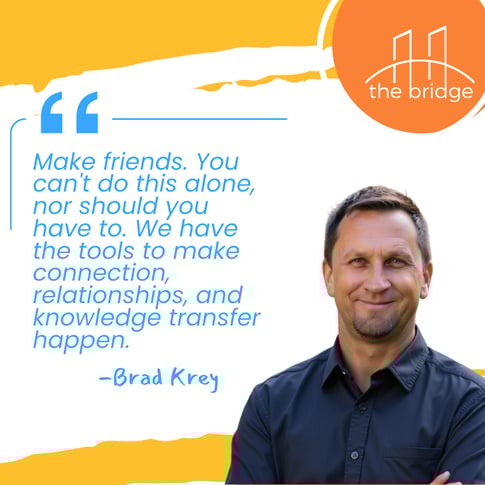
Brad Krey serves as Statewide Program Manager at California State Parks with over 25 years of experience in public engagement, education, and outreach. He leads multidisciplinary teams and manage complex projects to deliver solutions that expand access and improve services for people who want to learn about California. A pioneer in digital storytelling, he’s implemented innovative, tech-forward initiatives that connect diverse communities to the state’s natural and cultural resources. With a strong foundation in public service and policy, Brad is known for launching high-impact programs through strategic partnerships that increase equity, visibility, and relevance of public lands. Lastly, he’s best known for the Parks Online Resources for Teachers and Students (PORTS) Program and a suite of digital outreach and education tools and programs that have engaged over 2 million students over the past two decades.
Key Takeaways
- Technology becomes truly powerful when it deepens human connection, not distracts from it — PORTS is a model of using digital tools to expand access, curiosity, and belonging.
- Brad shares how, within a week of pandemic shutdowns, his team launched live kayak tours and underwater explorations for tens of thousands of students — proving what’s possible when passion meets purpose.
- You don’t need to be near a state park to bring one into your classroom — PORTS offers free, live, standards-aligned experiences that can ignite inquiry and help scaffold future in-person learning.
- Authentic connection is built when people choose to show up for learners — interpreters, teachers, partners, and communities working together to widen access, reduce barriers, and inspire the next generation.
Resources & Mentions
- PORTS Program
- California State Parks PORTS Program - YouTube Channel
- California State Parks PORTS Distance Learning Program - Facebook Group
- California State Park Adventure Pass
Transcript
Cate Tolnai (she/her): Well, hello. Hello, my good friend Brad Krey. Good morning to ya. Good day to ya.
Brad Krey: Good morning
Cate Tolnai (she/her): thanks for joining us on The Bridge. have fun. I feel like you and I met over the summer down in Santa Barbara and we were, maybe I mentioned this or not, but I like I just told you, this is, you're kind of coming in at the tail end of this limited series of The Bridge and I am like so grateful we were able to find the time to do it 'cause.
I love, I love your voice in the space of education,
Brad Krey: Oh, thank you.
Cate Tolnai (she/her): yeah. And
Brad Krey: Stoked to be here. It was great seeing you over the summer, as it
Cate Tolnai (she/her): yeah. Yeah.
Brad Krey: to, to connect on all things, education
Cate Tolnai (she/her): Yep.
Brad Krey: technology and
Cate Tolnai (she/her): Mm-hmm.
Brad Krey: connections and yeah, really excited to be here and been fun to watch the bridge kind of get off the ground, so
Cate Tolnai (she/her): Oh, that's cool. Look at that. We have a viewer. That's amazing.
Brad Krey: Yeah.
Cate Tolnai (she/her): so tell, tell, tell us what your, what your deal is. What your, what you do.
Brad Krey: Yeah. Yeah, yeah. Thanks. work for California State Parks. I'm here in California in San Diego, beautiful San Diego, California. and I in California state parks, which I've worked for since last century, I keep telling
Cate Tolnai (she/her): Oh my God. That's the best.
Brad Krey: since last century over spanning four decades now. Four different decades, not
Cate Tolnai (she/her): Seriously?
Brad Krey: right?
Yeah, four different
Cate Tolnai (she/her): Mm-hmm.
Brad Krey: working in the nineties, for state parks. yeah, so I work, in our interpretation education division, which is, supporting of California state parks, which is the nation's largest state park system. In the outreach education and interpretation, which is kind of the park programming side of things. all things that for, for the public and in particular, over the past 20 years, focusing on California's K 12 public education students and how they can get connected to, to California state parks. so, yeah, that's kind of my jam. I, the, the big thing that we're known for is the ports program, which is Parks online resources for teachers and students. And, that's a live video program. Some people call it a virtual field trip, although
Cate Tolnai (she/her): Mm-hmm.
Brad Krey: much more than that. It's
Cate Tolnai (she/her): Totally.
Brad Krey: Yeah. Conversation with our, you know, our park staff. You'd call 'em a park ranger, in a park with your classroom. So if you're teaching. grade missions here in California. actually have a, a live human person on the other end of, of a zoom call to walk you through the California mission and help, interpret and understand and converse about the stories that are held within those structures and on those sites, in real time. so we do that and, the other flavor of the ports program is a live broadcast.
So if you're not able to get one of those lucky lucky schedules, events, with your classroom, you can join up to a thousand other classrooms and watch a live broadcast, just like a live television show. So, so yeah, that's, that's our jam and we've been doing that. This is our 21st year of
Cate Tolnai (she/her): That blows my mind. Come on.
Brad Krey: Yeah. Yeah. People often,
Cate Tolnai (she/her): year.
Brad Krey: 21st year,
Cate Tolnai (she/her): That's
Brad Krey: really was when we, when we started, looked totally different then, obviously. Right.
Cate Tolnai (she/her): yeah, yeah. Yeah.
Brad Krey: but,
Cate Tolnai (she/her): how did it look back then? Like what, what was that?
Brad Krey: Yeah, so, very complicated, costly, a little more costly. was not mobile. We were using like satellite links sometimes.
Cate Tolnai (she/her): Interesting.
Brad Krey: like, you know, point to point systems from a park to a
Cate Tolnai (she/her): Yes.
Brad Krey: to get on the high speed network, which was a growing thing.
Then,
Cate Tolnai (she/her): Wow.
Brad Krey: One of the, the things that we do say is we were one of the reasons that like maybe internet got going in schools because I have stories of my
Cate Tolnai (she/her): Yeah.
Brad Krey: within the state legislature and with executives at the Chi. California High Speed Network and the Digital California project to say, Hey, here's what we could use internet for in the classroom. what we did is we showed people like a live park ranger from in the middle of remote Anza Breal Desert, and gave a 30 minute lesson on the geology and the paleontology of that specific. Area
Cate Tolnai (she/her): Oh my gosh,
Brad Krey: look, you know, fifth or sixth grade we're learning about paleontology, and sure you could teach it out of a textbook or you could have this park ranger here
Cate Tolnai (she/her): right.
Brad Krey: showing you California based resources for California students and inspire them maybe to go visit or, you know. You know, go learn more locally at a park
Cate Tolnai (she/her): Yeah.
Brad Krey: a place. So, but it looked like that back then. It was, it was definitely more complicated. the years, things got more mobile, more user friendly, easier
Cate Tolnai (she/her): Yeah,
Brad Krey: teacher friendly, even Right
Cate Tolnai (she/her): yeah.
Brad Krey: as education technology kind of evolved. Right.
Cate Tolnai (she/her): Yep.
Brad Krey: And, we, we call COVID really kind of our evolutionary event, like the meteor or dinosaurs situation, right? Where, where schools shut down everybody went home and was supposed to learn. We had all these people who were already doing remote stuff and
Cate Tolnai (she/her): Yeah.
Brad Krey: And
Cate Tolnai (she/her): All.
Brad Krey: we worked with our partners Zoom video communications, turn on all of the, what we now know as a webinar
and within a week we were. live educational content for people learning from home. you know, if everybody went home on Friday, we were like up and running on like Thursday of the next week. And we're do,
Cate Tolnai (she/her): oh my gosh.
Brad Krey: the first one we did was a live kayak tour at Point Lobo State Natural Reserve, which is in Monterey Bay.
Cate Tolnai (she/her): All right.
Brad Krey: we had that tens of thousands, you know, of participants,
Cate Tolnai (she/her): How did you get the word out so quickly? Or do you think people knew and then just hadn't figured out like how to use it? Like what was that? How did you get so many so fast?
Brad Krey: Yeah, so, so we had, we, we had, we had hundreds of programs scheduled already on these one-to-one
like, and so we let our teacher community know, we have a social media presence
Cate Tolnai (she/her): huh.
Brad Krey: put it out there, California State Parks, which has a, you know, a very big web presence in
Cate Tolnai (she/her): Mm-hmm.
Brad Krey: digital footprint, if you will, right. They said, Hey, you know, wanna learn from home. So that went out to hundreds of thousands of people.
Cate Tolnai (she/her): Wow.
Brad Krey: then I think just like some, you know, some of that internet magic happened and
Cate Tolnai (she/her): Yeah.
Brad Krey: somebody started a, a group on Facebook of like learning resources at home. Somebody, you know, put it there and yeah, it just like, took off from there.
and then, you know, after that evolutionary event, we, we grew. Pretty rapidly, you know, we evolved quickly, if you will. And, and so we just continued doing these live broadcasts because the one-to-one calls really became, like, kind of, valued and really like sought after by educators. And
Cate Tolnai (she/her): Yeah.
Brad Krey: to this day.
Cate Tolnai (she/her): Yeah.
Brad Krey: the, the ports
Cate Tolnai (she/her): I,
Brad Krey: this school year will reach about 250,000, California public school students.
Cate Tolnai (she/her): That is incredible.
Brad Krey: Yeah. Through,
Cate Tolnai (she/her): See.
Brad Krey: three or 4,000 individual like presentations.
Cate Tolnai (she/her): Wow.
Brad Krey: Yeah. that's, that's what, and, and, and they're, they're, they're. connections, right? They're
Cate Tolnai (she/her): Right?
Brad Krey: whether it's one-on-one or one to to many. We are trying to foster conversation
Cate Tolnai (she/her): Mm-hmm.
Brad Krey: thought and, and careful consideration about what it is that we're, we're presenting. Whether it's, like I said, the Redwood Forest or, or a California mission or the vast. desert of Anza-Borrego.
Cate Tolnai (she/her): Right.
Brad Krey: and, and all of it ends with a, you know, go explore
Cate Tolnai (she/her): Yeah.
Brad Krey: visit your parks.
because a lot of the kids that we talk to are nowhere near. The
Cate Tolnai (she/her): Right.
Brad Krey: actually talking to.
Cate Tolnai (she/her): Yeah.
Brad Krey: and the reality is, in California with 6 million public school students, the vast, vast, vast majority of them will not visit a Redwood forest
Cate Tolnai (she/her): Hmm.
Brad Krey: a, as a part of their learning experience.
Cate Tolnai (she/her): Mm-hmm.
Brad Krey: about it
Cate Tolnai (she/her): Mm-hmm. Mm-hmm.
Brad Krey: a creative teacher, helps them learn about it, but. We think one of the best ways to learn about it is to actually put the live human expert, the ranger in front of those students, and, and foster as much conversation as possible.
Cate Tolnai (she/her): And they do such a good job, Brad, like
Brad Krey: you
Cate Tolnai (she/her): I have had. the pleasure of working with your interpreters a few times, and I just like the, they just exude passion for their work. Like, and I think what's also really special is you have an opportunity for every interpreter to kinda like. Be good at what they want to be good at.
You know, like, like there are some that are just like, Nope, I wanna be in front of the camera. I like, that's my jam. Or others that are like, no, I'm really comfortable doing this stuff in person with kids or others that are like, you know, my part is I like, I really wanna connect with the teacher beforehand.
Or like, it's just so, like the group is really dynamic and I think you do a really good job of like giving them the space to be good at that, good at what they wanna be good at. And then. That's what bring, I think that's what brings like such a high quality to what you all offer and authenticity because
Brad Krey: Yep.
Cate Tolnai (she/her): you're, you really do, like you, you are literally like connecting over distance and devices you're learners to spaces in ways that I'm liter I don't see anyone else doing.
And you're doing it with the care and, and the love of individuals that are like that believe in it. And, and that me matched with the teacher who's like, I, I believe in it too, and I wanna bring my kids to it. Like it is, like this, the most symbiotic, beautiful, like, marriage of a project to watch. And, and I guess like, I, I don't know.
I, I think we've talked so much about like, connections, technology, like using the technology to, to foster that. And you're in a space in which I don't think anybody would've naturally placed technology in California state parks. You know, like, because it's such like a, it's, it's such a, in, it has a reputation of being like, no, you must be there in person.
And yet you're bringing so many people to that. So how is it that you like work with your interpreters to get them to that place? Like how do you prepare them to do that? Because. Teachers, I think, could learn so much from that. And I think interpreters could learn from teachers. And so as I'm like curious to know how you do that.
Brad Krey: yeah. Well, well, well, that's what we do is we try to like. remind them that, you know, they are helping teachers
Cate Tolnai (she/her): Mm-hmm.
Brad Krey: and students succeed. Right. So, and I think, you know, we need to go back to the people that are doing this job really are passionate about what they do. They're, they're,
Cate Tolnai (she/her): Yeah.
Brad Krey: they're passionate about the communication of it.
They're passionate about sharing their passion for a particular resource, whether it's a natural resource or a cultural resource, or just the stories or the culture itself. Right. so, so thank you for recognizing that because that is really important that when you're passionate about it and you want to get the word out, these, these are the folks, and, and what we are doing is we're just giving them the, the, the 21st century tools for what we've always been doing in a park service or a park system, which is you came to visit and I'm going to help.
Inspire you. You know, nature will inspire you too, but I'm gonna help to interpret that and, and enlighten you a little bit on the unseen, if you
Cate Tolnai (she/her): Hmm. Hmm.
Brad Krey: And what we do And, and I have to say, I have a team of four or five people at any given time that are the, the folks that are like out there doing the training and working one-to-one with the up to a hundred people that we, that give these programs. but they, what we do is we just try to empower them with the best tools possible.
Cate Tolnai (she/her): Yeah.
Brad Krey: And that's like, live video like became, like, became the thing for us because it's like. Hey, this, you used the word auth, authenticity, authentic, right? Like this is an authentic experience. Our, we have a YouTube channel with hundreds of videos
Cate Tolnai (she/her): Right.
Brad Krey: but they don't get a lot of views because
Cate Tolnai (she/her): How interesting.
Brad Krey: I think people want the live experience.
Right?
Cate Tolnai (she/her): Yeah.
Brad Krey: I, I'm sure there's research done about what plays well and you know, there
Cate Tolnai (she/her): Mm-hmm.
Brad Krey: point in the internet where live was skiing, right?
Cate Tolnai (she/her): Yeah.
Brad Krey: or in charge, But, so we continue to try to, just at least filter out all the noise of these digital tools
Cate Tolnai (she/her): Yeah,
Brad Krey: with what educators are already using so that it's easy for the educator because we don't want to make this hard for educators, right.
Cate Tolnai (she/her): I love it.
Brad Krey: because we wanna help them teach. We don't want to be a barrier. Right. And, and that's what we've kind of come up with. It's this, this recipe, this soup, if you will, that it's just, there, there's a place on the internet you can go ports, parks.ca, dot gov,
Cate Tolnai (she/her): Yep.
Brad Krey: there's times available. And if it's a program that's of interest to you and your students, whether it aligns with your content standards or whatever, or not. There is gonna be somebody on the other end of that call who is gonna help you learn more about that place and those stories and, and make it meaningful and relevant for your students. So, it, it's really an ongoing, it's, it's, it's, it's so similar to education, right? Where teachers are, are constantly evolving, whether they like it or not.
Cate Tolnai (she/her): Yeah.
Brad Krey: are evolving, their
Cate Tolnai (she/her): Yeah.
Brad Krey: is evolving. It's the same thing, just we happen to get to walk in a redwood forest
Cate Tolnai (she/her): Oh my God.
Brad Krey: a tide pool or, you know, mountaintops and, you know, so
Cate Tolnai (she/her): Okay. So how did you get to this four decades ago? Like, how did, how did you get here?
Brad Krey: yeah, yeah. It's a great question. There are some very forward thinking people in this, department, California state parks who. We're looking for ways to increase, access to exposure, to engagement with K 12 education. they were, they, they were already invested in education, you know, in general, maybe in their personal and professional lives. education is baked into California State Park's mission. So this was not new to us. and I think at that time there was a focus on, all right, like. High need students, right? Like
Cate Tolnai (she/her): Mm-hmm.
Brad Krey: like LA and
Cate Tolnai (she/her): Mm-hmm.
Brad Krey: and, and or super rural like, Imperial Valley
Cate Tolnai (she/her): Yeah.
Brad Krey: you know, central Valley who, who aren't necessarily getting access to those parks because things might have been far away, or it was complicated in their system,
Cate Tolnai (she/her): Mm-hmm.
Brad Krey: it just kind of wasn't thought of as a resource,
Cate Tolnai (she/her): Mm-hmm.
Brad Krey: And so, somebody, you know, people along the way said, well, let's try to, of always trying to have people come out to us, right, don't we bring parks to them? In the classroom. And that was the birth of Parks online resources for teachers and students. And I mean, it's pretty simple. Like, again, like we,
Cate Tolnai (she/her): Yeah.
Brad Krey: who, who had forward enough thinking ideas to say, Hey, there's this technology where there's live video happening on this internet thing. what if the live video didn't look like, you know, board members talking to investors,
Cate Tolnai (she/her): Right, right.
Brad Krey: and this video communication system was already being set up in, in school systems for, for a couple of different things. Like I remember, Shasta County there was a video conferencing program. Run by the county office because they didn't have enough math teachers to go out
Cate Tolnai (she/her): Mm.
Brad Krey: rural parts of,
Cate Tolnai (she/her): Yep.
Brad Krey: Shasta County at the time. So they had, you know, one, I don't know if it was algebra or calculus teacher, but kids in a school could call in
Cate Tolnai (she/her): Mm-hmm.
Brad Krey: the county office and they would get their math lesson. Right. And so like we had seen some of those things. We also knew that like superintendents had it in their, their office so that they could, you know, not travel to the district office or
Cate Tolnai (she/her): Right.
Brad Krey: that. So, so we, we repurposed the technology right. For, for student, en engagement and for student good.
Right. And, and there's dozens of. Things that have followed the same trajectory,
Cate Tolnai (she/her): Yeah.
Brad Krey: a
Cate Tolnai (she/her): Mm-hmm.
Brad Krey: need for this, but we're using it like, for like the actual, like what we think is like a really good thing. I als I forget to tell people everything we do is completely free. there's
Cate Tolnai (she/her): God. Right. We didn't even talk about that.
Brad Krey: And.
Cate Tolnai (she/her): note.
Brad Krey: Yes, I know. totally, completely free, right? Because recognizing again, that like,
Cate Tolnai (she/her): Oh my gosh,
Brad Krey: field trips are and, budgets are never getting better, especially for, trips. You know, at least in the, like I said, since last century, getting any better. So
Cate Tolnai (she/her): No.
Brad Krey: completely free. So, and, and that, and that really comes down to the. need strong, deep partnerships and relationships with
Cate Tolnai (she/her): Right, right.
Brad Krey: with nonprofits like, nonprofit parks, California, local nonprofits that support parks and say, oh wow, this is a way that we can increase K 12 access. How do we support the local staff and the local schools to make this happen?
Cate Tolnai (she/her): Right.
Brad Krey: and then of course, with our, we actually also have corporate sponsors and. Partners in, in Zoom video communications, which actually provides us all the tools and services that we need to do this. So it's an amazing, it's an amazing recipe and
Cate Tolnai (she/her): I
Brad Krey: been, yeah.
Cate Tolnai (she/her): and it, I just think it, like, I, I mean so much about what we've explored on this series is connections, and I feel like what ports has, what ports, it's kinda like a micro study of like the power of, talent, interest and resources mixed with. Like a, a real, need and desire to partner and connect with other people and offer it without the barrier of cost.
And it's, it's so hard, like for, for me, as somebody who's been in education for 23 years, who's wa I've seen it from. The nonprofit side from the private school, from the public school, from the charter, from the for-profit side. And it's like I look at what I, look at what you do, what you lead with your team, and just like, it's so hard for me to wrap around my, my head around the fact that it even exists because it like bucks the system on every level.
Brad Krey: Yeah. Yeah, yeah, yeah, yeah, it does. and, and that's, that's us. I mean, we
Cate Tolnai (she/her): Totally.
Brad Krey: you know, we're leading edge on all on
Cate Tolnai (she/her): Mm-hmm.
Brad Krey: Like, you know, like I, a while there, I mean there's, there's some incredible uses of educational technology, but I just really feel, felt like and still do that. This is one of the greatest uses of educational technology.
Cate Tolnai (she/her): agree.
Brad Krey: and, and, and others are doing it, like others are trying it. But we have. We're a state park system, right? These
Cate Tolnai (she/her): Mm-hmm.
Brad Krey: is your state parks. These are state parks that have been set aside to tell these stories.
Cate Tolnai (she/her): Hmm.
Brad Krey: Educators are required or inspired to tell these stories, you know, to their students
Cate Tolnai (she/her): Yeah.
Brad Krey: residents, right? So like. These resources that we're telling the stories about really are inherent to those Californians, right? Those
Cate Tolnai (she/her): Yeah.
Brad Krey: generations of Californians. Right? And so, like, I often, like, I, I go back to like, when I went to school in the. Eighties, right?
Cate Tolnai (she/her): Yeah.
Brad Krey: there were posters on the wall of the local, like visit this historic site and you know, that teacher either went there over the summer
Cate Tolnai (she/her): Right,
Brad Krey: the poster and put it on the wall
Cate Tolnai (she/her): right.
Brad Krey: or they wrote away for a free poster or whatever, put it on
Cate Tolnai (she/her): Yep. Yep.
Brad Krey: This is what we're doing. Like we're the, we're the 21st century poster, right? Like now it's
Cate Tolnai (she/her): Oh,
Brad Krey: there's the human aspect of it, right? Which
Cate Tolnai (she/her): right.
Brad Krey: the incredible person on the other end of the call that we still get, we still get letters and
Cate Tolnai (she/her): Yeah,
Brad Krey: and canvas sites and padlets of like, thank you Ranger Lily for walking us through the sequoias
Cate Tolnai (she/her): of course.
Brad Krey: you know, the incredible opportunity to be on a kayak.
And how awesome was it that we learned about. You know, gray whales and just like, all of these things are just like, so California.
Cate Tolnai (she/her): I know.
Brad Krey: and so like, it's, it's been great. And, and I'm not saying any other state couldn't do it.
Cate Tolnai (she/her): Sure.
Brad Krey: does it as well, but they're big, big and
Cate Tolnai (she/her): Yeah.
Brad Krey: We are fortunate enough, I think, in California to, again, like part of the recipe is. Being allowed to try these things. Right. And,
Cate Tolnai (she/her): Yes.
Brad Krey: we have, we have great support inside California state parks, inside, you know, all the other organizations around us in the state system. recently our, know, we've been honored to be working with Jennifer Siebel Newsom on outdoors access for all opportunities and
Cate Tolnai (she/her): Love it.
Brad Krey: and it's just been really, really cool. And, and this, it's also great to know that people are recognizing that this is a way that we can do things.
Cate Tolnai (she/her): Yeah, and, and oh my gosh, there's so many things. First of all, yes, I guess any state could do this, but. There is something, I mean, I'm a California girl, so this could just be my perspective, but I think, I think the way in which your team honors like the indigenous community and really respects the land and really hones in on that piece is very unique and empowering for all participants, whether they realize it or not.
And I would say like that, that's something that I think is. Is forward and important to keep in mind as well. and then I also, as I'm like listening to you talk, I wanna go put on my, and I've said this before, I wanna put on my Oculus headset and I just wanna be in a park with you guys. Like, so tell is that coming?
Like can we do that one day is at who?
Brad Krey: yeah. Yeah.
Cate Tolnai (she/her): That would be dreamy.
Brad Krey: Yeah, we already have some of it, you know, some version of it
Cate Tolnai (she/her): Yeah.
Brad Krey: not as topnotch as it could be now. And what we're doing now may not be great, you know, nine months from now.
Cate Tolnai (she/her): Sure. Sure.
Brad Krey: I think that, I think, I still think, especially for Key 12 education, that, immersive experiences ar, vr,
Cate Tolnai (she/her): Yeah.
Brad Krey: however you wanna
Cate Tolnai (she/her): Yeah.
Brad Krey: it. I think that there's still a lot of value in that. And I don't, I don't mean like the gamified
Cate Tolnai (she/her): Right.
Brad Krey: like. cartoon eyes, but like we have the technology. We did
Cate Tolnai (she/her): Yeah.
Brad Krey: virtual reality headset program from Angel Island Immigration Station into a
Cate Tolnai (she/her): Oh my gosh. Just stop,
Brad Krey: or six years ago. and, and
Cate Tolnai (she/her): huh?
Brad Krey: I try to keep my finger on the pulse of what's happening in
Cate Tolnai (she/her): Mm-hmm.
Brad Krey: and, you know, I feel like, immersive stuff, ar VR XR is maybe taking a backseat to AI
Cate Tolnai (she/her): agree. I agree.
Brad Krey: Yeah, but I, but I still think that there's something there because the immersive experiences can really bring people closer to those
Cate Tolnai (she/her): Mm-hmm.
Brad Krey: Right.
Cate Tolnai (she/her): Mm-hmm.
Brad Krey: things we really try to do with ports is not only reduce, like the logistical barriers of being able to connect with a park,
Cate Tolnai (she/her): Mm-hmm.
Brad Krey: it easy for teachers to connect with us, but also those actual barriers, right? Like, so like. You know, we talk about the underwater world of, you know, the marine protected areas network here in California. like, it's great if you can stand on the shoreline, even if you're at the park, right, and
Cate Tolnai (she/her): Yeah.
Brad Krey: shoreline and say, there's all this amazing stuff
Cate Tolnai (she/her): Yeah.
Brad Krey: there. 10 years ago, we developed ways to do live underwater dive videos. So we actually do that at least once a year where
Cate Tolnai (she/her): My gosh.
Brad Krey: underwater doing a live program.
So, so there's that, but then how can you take that and scale that up
Cate Tolnai (she/her): Yeah.
Brad Krey: it sustainable? 'cause diving is not sustainable. Like, you know, now you can't have people just dive in all the time doing stuff live. But like, can you create live or can you create underwater vr?
Cate Tolnai (she/her): Yes.
Brad Krey: put people in there.
Yeah. And
Cate Tolnai (she/her): That's cool.
Brad Krey: with all of that stuff. 'cause I think that, I think it's important to, again, remove that distance, right.
Cate Tolnai (she/her): Yeah. Yeah.
Brad Krey: and say, well, let's put you actually in here for inspiration, for learning, for curiosity.
Cate Tolnai (she/her): Yes.
Brad Krey: those things that, that I think that a younger generation is, is expecting out
Cate Tolnai (she/her): Yeah.
Brad Krey: How do I learn about this, right?
Cate Tolnai (she/her): Yes.
Brad Krey: the content. again, like, you know, live being one thing, but also then immersive being another thing, and
Cate Tolnai (she/her): Yeah,
Brad Krey: yeah, eventually, yeah. I think it's gonna be live immersive, so,
Cate Tolnai (she/her): that would be so wild. I can't wait.
Brad Krey: Yeah,
Cate Tolnai (she/her): You, I think you really like your job. I've known you for like almost 10 years and you're always like, happy to talk about this. Like, that's so great.
Brad Krey: Yeah, yeah. It, it's, it's passion. I think, you know, you,
Cate Tolnai (she/her): Yeah.
Brad Krey: talked about it before, I've, I've been, again, lucky enough to, experiment and to, try new things, take calculated risks, that, that brings me joy, right?
Cate Tolnai (she/her): Yeah.
Brad Krey: I think that. What, what I do and what we do in the ports program is unique anywhere in the country, maybe in the world, especially for a government system,
Cate Tolnai (she/her): Yeah,
Brad Krey: to, to, to really be looking at the most innovative ways to, to provide, you know, the access in the 21st century. But yeah, it's, the, the enthusiasm and the enjoyment comes from. Yeah, it's working man. Like this
Cate Tolnai (she/her): I know.
Brad Krey: brainer, like this, like 250,000 kids are gonna see and
Cate Tolnai (she/her): It's so crazy.
Brad Krey: and, and, and, and one of our expert staff members. And, and now like we, we, we even try to back that up with, hey, if you live close to a park, we'll take you on a field trip to that park. and we've created, the
Cate Tolnai (she/her): Oh, right.
Brad Krey: we've created is called blended access. So like.
Cate Tolnai (she/her): Ooh.
Brad Krey: lends itself from blend, from blended learning, right?
Cate Tolnai (she/her): Yeah.
Brad Krey: of digital experiences and digital learning combined with group work and, and presentations and all this stuff. So we do that, but we call it blended access, where there's a live ports program and then there's an in-person experience MO mostly with that person that was on TV with them. So there's this incredible
Cate Tolnai (she/her): Wow.
Brad Krey: This ready set group of students who are like, Hey, I already know you. We learned a little bit about this. Let's go.
Cate Tolnai (she/her): That's so cool.
Brad Krey: where. know, like it or not? I think some, I, I think some teachers and students in particular have not, they're not ready for a field trip, so maybe the learning isn't happening as quickly
Cate Tolnai (she/her): Yeah.
Brad Krey: like. You know, when they show up, they're not sure if they're safe in nature and they're not
Cate Tolnai (she/her): Yep.
Brad Krey: safe in an old building.
Cate Tolnai (she/her): That makes.
Brad Krey: if they're safe 'cause they've left their community. Right. So, so
Cate Tolnai (she/her): Wow.
Brad Krey: things and we call it blended acts, and the idea is at the end of that.
There's some sort of other digital follow up, whether they create artifacts of learning or they contact back to us and tell us what they learned. So it creates this deeper relationship, the core with that park and that park staff member. So that maybe that kind of continues on down the road in their learning journey or that teacher's teaching journey, remind them that parks are, they exist to help them, their students learn and be inspired.
Cate Tolnai (she/her): I always have this feeling after we talk about this stuff of like, I would love to be back in the classroom and be able to like do this with. It's with human kids and like see them go
Brad Krey: Yeah. Yeah.
Cate Tolnai (she/her): like that, that feeling. 'cause I know it happens. And it, what was awesome was we were in, we were at the spring CUE conference a couple years ago and you guys ports partnered with Ann for her, Ann Kozma for her keynote.
And there was a live in the field interpreter experience happening for, I don't know, 8,007. 6,000 teachers.
Brad Krey: The
Cate Tolnai (she/her): It was,
Brad Krey: Yeah.
Cate Tolnai (she/her): oh my God, it was so cool. And all I could think of my, I was mathing and I was like, okay, so if there's 6,000 educators and they each have roughly 30 to 50 teachers or students that they work with, ha like,
Brad Krey: Yeah,
Cate Tolnai (she/her): like the reach.
The reach is so cool. And
Brad Krey: That was
Cate Tolnai (she/her): yeah.
Brad Krey: do and I think it's
Cate Tolnai (she/her): That was so fun.
Brad Krey: of its kind, I think
Cate Tolnai (she/her): Especially for CUE.
Brad Krey: Which
Cate Tolnai (she/her): Mm-hmm.
Brad Krey: huge partner for us
Cate Tolnai (she/her): Mm-hmm.
Brad Krey: California because they have the network of educators who who get it right. They
Cate Tolnai (she/her): Yeah.
Brad Krey: and they go. Oh, I get this, this is
Cate Tolnai (she/her): Yeah.
Brad Krey: I can do this. and, and actually, and they're working with us hand on hand on the, the actual, the blended access field trip things too, which like,
Cate Tolnai (she/her): Oh, that's great.
Brad Krey: it's, it's been incredible to work with them, to work with organizations that are, are teachers that are focused in this area of education, technology, or just innovative teachers.
Cate Tolnai (she/her): Yeah.
Brad Krey: Yeah. Like teachers that are, I think, open to the
Cate Tolnai (she/her): Yeah,
Brad Krey: what, what should be and could be best new ways to learn. Of course, there's a lot of, there's a lot of noise out there. Right. And I
Cate Tolnai (she/her): totally.
Brad Krey: but I think that teachers, especially the, the CUE teachers. now known as CALIE,
Cate Tolnai (she/her): Mm-hmm.
Brad Krey: are out there. They're, they're sniffing out the like, oh, all right.
Yeah, I get it. I can see how this works in my, my, my, my environment. But that was, that was a fun thing and it really does help feed back into the passion, right?
Cate Tolnai (she/her): Yep.
Brad Krey: to be able to put state parks and our programs in front of 4,000 teachers again to remind them, Hey, you don't need to live next to,
Cate Tolnai (she/her): Yeah.
Brad Krey: lake Tahoe to take your kids to Lake Tahoe.
Cate Tolnai (she/her): Oh my gosh.
Brad Krey: on the
Cate Tolnai (she/her): Right.
Brad Krey: of Lake Tahoe talking about water clarity. You know, like how cool is that? So
Cate Tolnai (she/her): so cool. you have such a cool job. I'm so jealous. And, I admire the work you do 'cause you do it really well. and I will say that. I feel like I'm gonna go back through this and collect all the resources you were just talking about and I'll make sure to put them in the show notes. 'cause I feel like part of what we can do too is like amplify the resources, but also connect teachers to the community because they do have such a really beautiful, vibrant community.
So we'll do it. We'll do it. We'll get it all in there. And I am. Always grateful to have time with you and always love highlighting the work that Ports does because it's so, it, I think it, like I said, it just, it is the, the case study that is, it's what happens when people are decide to connect authentically with each other, all for the good of students and like, that's exactly what, you know, we've been talking about for months here on the bridge.
So.
Brad Krey: And, and recognizing that educators are continuously under stress and
Cate Tolnai (she/her): Yeah.
Brad Krey: and overtaxed, you know, the, the Ports program and California State Parks in general, we are working very hard to, to remove the barriers, remove the, the, the hurdles to, to getting back to even, you know, to real field trips or access to curriculum and resources that will be helpful to them. For their students. so it's been a pleasure to chat with you. It's
Cate Tolnai (she/her): Yeah.
Brad Krey: And likewise, I, I admire the work of every teacher,
Cate Tolnai (she/her): Yeah.
Brad Krey: everywhere. because, you know, they're the, they're the other, they're the connector. They're the, the
Cate Tolnai (she/her): Yep.
Brad Krey: And I think now more than ever in the 21st century, we have the opportunity to connect teachers outside of the classroom walls.
Cate Tolnai (she/her): Yeah. Yeah.
Brad Krey: are resources available to them. Not only us, but there's just tons of, tons of
Cate Tolnai (she/her): So much.
Brad Krey: And I, you know, just to remind them that they're not alone
Cate Tolnai (she/her): Mm-hmm.
Brad Krey: people there to help them and there's organizations there to help them, for their students, to, to help teach the tough subjects and have the conversations and, and create the network.
So we appreciate you putting, putting that all out there in the show notes. And I'd love to chat with anybody else, you know, who wants to talk
Cate Tolnai (she/her): Oh,
Brad Krey: of
Cate Tolnai (she/her): love it.
Brad Krey: it's, it is a passion of mine.
Cate Tolnai (she/her): Oh my God, you're the best, friend. Thank you as always. Until next time my friend.